50% off your first booking!

Why Your Windows Look Dirty Even After You Wash Them: Streak Free Window Cleaning Tips
Achieve perfectly clear glass by cleaning on a cloudy day using a squeegee and a mixture of distilled water and mild dish soap or vinegar. These streak free window cleaning tips prevent marks by ensuring the solution does not dry too quickly and by using lint-free cloths for the final wipe. For the best results, avoid over-using detergents and finish with a small amount of methylated spirits to remove any remaining residue.
WINDOW CLEANINGHOME MAINTENANCE
Angus Watts
7/16/20267 min read
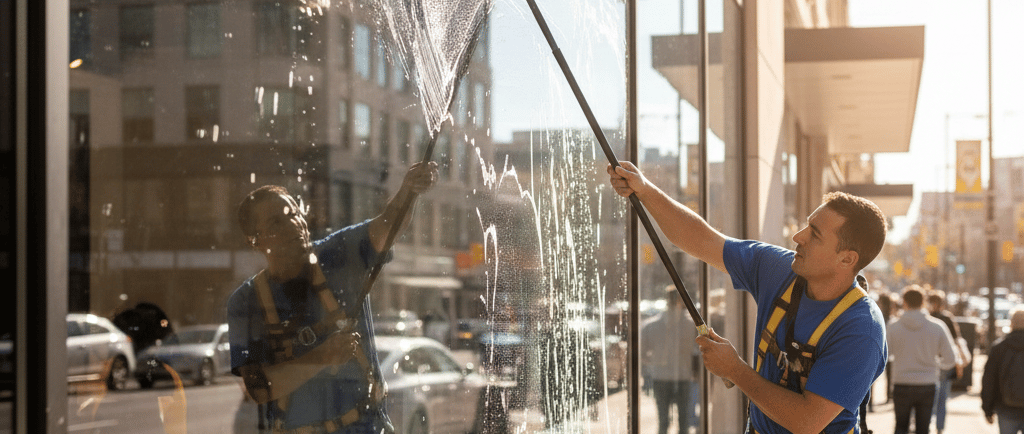

Few things are more frustrating than spending your entire Saturday scrubbing glass only to have the afternoon sun reveal a map of hazy streaks and lint. It is a common struggle for Lake Macquarie homeowners who put in the work but fail to achieve the professional results they deserve. Achieving a crystal clear finish requires more than just elbow grease; it involves understanding the chemistry of evaporation and using the precise tools of the trade. In this guide, we will explore why standard DIY methods often fall short and how you can upgrade your technique using expert grade equipment. You will learn how to mix the perfect solution for cutting through coastal salt spray, why you should abandon paper towels forever, and the specific environmental factors that dictate a flawless, streak free result.
The Science of Streaks: Why DIY Window Cleaning Often Fails
Most homeowners in Lake Macquarie have experienced the frustration of spending a Saturday morning scrubbing glass, only to find unsightly smears and haze as soon as the afternoon sun hits. This phenomenon is rarely due to a lack of effort; instead, it is a result of specific chemical and physical reactions that occur during the cleaning process. Understanding these factors is essential for anyone seeking practical streak free window cleaning tips.
The first issue involves the products found on supermarket shelves. Many common glass cleaners contain surfactants, perfumes, and waxes designed to make the product smell pleasant or provide a temporary shine. These additives leave a microscopic film on the glass. When you wipe the window, you are essentially moving this residue around rather than removing it. This film acts as a sticky substrate for environmental debris, which is a major hurdle for exterior maintenance services in our region. In Lake Macquarie, salt spray from the coast and fine dust settle onto wet glass almost instantly. If your cleaning agent leaves a tacky residue, those particles bond to the surface before the window even dries.
Another common failure stems from hard water minerals and improper rinsing. If you use a garden hose without the precision used in pressure washing, minerals like calcium and magnesium remain on the glass after the liquid evaporates, creating cloudy white spots. This is worsened by the use of paper towels. Rubbing glass with paper or dry rags creates a static charge on the surface. This friction-induced electricity turns your window into a magnet for lint and dust. Rather than achieving professional window cleaning results, you create a surface that actively attracts new grime. These four factors, soap residue, minerals, local salt air, and static electricity, ensure that traditional DIY methods often result in windows that look dirty again within hours.
Essential Equipment: Ditching the Paper Towels for Good
Professional tools like squeegees are the only way to ensure a streak-free finish.
Achieving a flawless finish requires a fundamental shift in the tools you use. Many homeowners rely on paper towels or old newspapers, but these are primary contributors to a hazy result. Paper towels are highly abrasive at a microscopic level and shed tiny lint fibres that stick to glass. While newspaper was once a popular DIY tip, modern printing uses different inks that often liquefy when wet, leading to dark smudges on your frames and glass.
To achieve professional window cleaning results, you must replace absorption with removal. The most critical tool is a high-quality squeegee with a replaceable rubber blade. Unlike a cloth that simply pushes dirty water around until it evaporates, a squeegee physically lifts the solution and the suspended grime off the surface entirely. If the rubber blade is nicked or hardened by the Australian sun, it will leave lines; therefore, choosing a model with a replaceable strip is essential for long-term exterior maintenance services.
Pair your squeegee with a microfiber washer, often called a T-bar, to agitate the dirt. This holds significantly more water than a standard sponge, allowing you to suspend grit and salt before the squeegee clears it away. Finally, keep a dedicated, dry microfiber cloth strictly for detailing the very edges of the frame where the squeegee cannot reach. Following these streak free window cleaning tips starts with putting down the paper products and investing in mechanical removal.
Step by Step Guide: Pro Level Streak Free Window Cleaning Tips
The S-stroke technique prevents water lines and drips from forming in the middle of the pane.
Once you have your professional grade tools, the next step is mastering the sequence. A common mistake is starting with a wet cloth immediately. Instead, begin with dry cleaning. Use a soft brush or a dedicated vacuum attachment to clear cobwebs, dead insects, and loose grit from the window frames and sills. In the Lake Macquarie climate, skipping this step risks creating a muddy sludge that will inevitably migrate back onto your clean glass during the drying process. If the exterior of the property is particularly neglected, starting with professional pressure washing for the surrounding surfaces can prevent dirt from washing down onto your clean windows later.
After the frames are clear, use your microfiber T-bar to apply your solution. Agitate the glass thoroughly, focusing on the corners where salt and grime tend to accumulate. The goal is to suspend the dirt in the liquid so it can be mechanically removed rather than just thinned out.
When you reach for the squeegee, move away from the basic vertical pull. Professionals utilize the S-stroke, or the swivel technique. This involves keeping the squeegee blade in constant contact with the glass, moving in a continuous fluid motion from the top corner, across the pane, and looping back down in an 'S' shape. This method is superior because it directs the water toward the uncleaned portion of the glass, reducing the number of times you lift the blade and preventing the start and stop marks common with straight pulls.
The most critical of all streak free window cleaning tips is the blade wipe. You must use a dry, lint-free cloth to wipe the rubber edge of your squeegee after every single pass. If the blade is even slightly damp when you start your next stroke, it will leave a visible line of water that dries into a streak. This level of precision distinguishes professional window cleaning from a standard DIY effort.
Finish by detailing the perimeter. Even with a perfect S-stroke, a small amount of water often remains in the very edge where the glass meets the frame. Use a dry microfiber cloth wrapped around a finger to trace the entire border of the pane. This prevents 'weeping,' where water hidden in the top frame drips down the glass minutes after you have finished. Incorporating these steps into your exterior maintenance services routine ensures a level of clarity that simply cannot be achieved through haphazard wiping.
Mixing the Perfect Solution: Vinegar vs Methylated Spirits
The chemistry of your solution is just as important as your squeegee technique. While store-bought sprays fail due to additives, professional results often rely on simple, balanced mixtures. A common question in exterior maintenance services is whether to use vinegar or methylated spirits as a primary cleaning agent.
For properties in Lake Macquarie dealing with hard water spots or mineral buildup from garden irrigation, a 50/50 mix of white vinegar and water is the gold standard. The acidity of the vinegar breaks down calcium and magnesium deposits that a standard soap cannot touch. If you are dealing with general environmental grime, a few drops of professional dish soap in a bucket of lukewarm water is more effective. The soap provides the necessary slip for your squeegee to glide across the glass without skipping.
Methylated spirits can be useful for cutting through heavy grease, such as kitchen window residue, but use it sparingly. In the intense Australian heat, spirits evaporate almost instantly; this often leads to the solution drying on the glass before you can finish your stroke. To ensure professional window cleaning quality, consider using distilled water if your local tap water is particularly hard. This eliminates the mineral content entirely, providing the cleanest base for these streak free window cleaning tips to work effectively.
The Importance of Timing: Why the Sun is Your Enemy
Even the most refined professional window cleaning technique cannot overcome the physics of a hot Australian sun. Direct sunlight turns a glass pane into a high speed evaporator; heating the surface until it is significantly hotter than the surrounding air. When you apply your cleaning solution to sun-baked glass, the water component flashes off almost instantly. This process leaves the soap and minerals to harden on the surface before you can complete a single squeegee stroke.
For residents in Lake Macquarie, the coastal sun intensity makes this timing critical. Attempting to clean windows in the middle of a clear day effectively bakes the residue onto the glass, resulting in a hazy finish that requires twice the effort to correct. The best strategy is to work on overcast days or during the early morning hours before the sun hits a specific side of the building. By keeping the glass cool, you ensure the solution remains liquid long enough to suspend dirt, which is a fundamental requirement for the most effective streak free window cleaning tips. Incorporating this into your exterior maintenance services ensures that the chemistry of your solution works with you, not against you.
Addressing Local Lake Macquarie Challenges: Salt and Grime
In Lake Macquarie, cleaning the sills and frames is just as important as the glass.
Living near the water in Lake Macquarie or along the coast of New South Wales introduces a unique contaminant: salt spray. Unlike standard inland dust, salt air creates a microscopic, sticky film that bonds to the glass surface. This film is particularly problematic when using generic supermarket cleaners. The sodium chloride in the air reacts with the surfactants and waxes found in many store-bought sprays, creating a gummy residue that resists evaporation and smears when wiped. For those following streak free window cleaning tips, the priority must be a thorough initial rinse to neutralise this salt before the squeegee touches the pane.
Furthermore, comprehensive exterior maintenance services must extend beyond the glass itself. In our windy coastal environment, dirty window tracks and sills are the primary cause of immediate re-soiling. If the tracks are filled with fine sand and grit, the afternoon lake breeze will lift those particles and deposit them directly onto your freshly cleaned, still-damp windows. Neglecting these areas often necessitates professional pressure washing for the sills or a detailed vacuuming of the tracks to prevent wind-blown streaking. Achieving professional window cleaning standards in Lake Macquarie requires a holistic approach that accounts for the constant interaction between salt, wind, and building architecture.